What a Room Tells You Before Anyone Opens Their Mouth
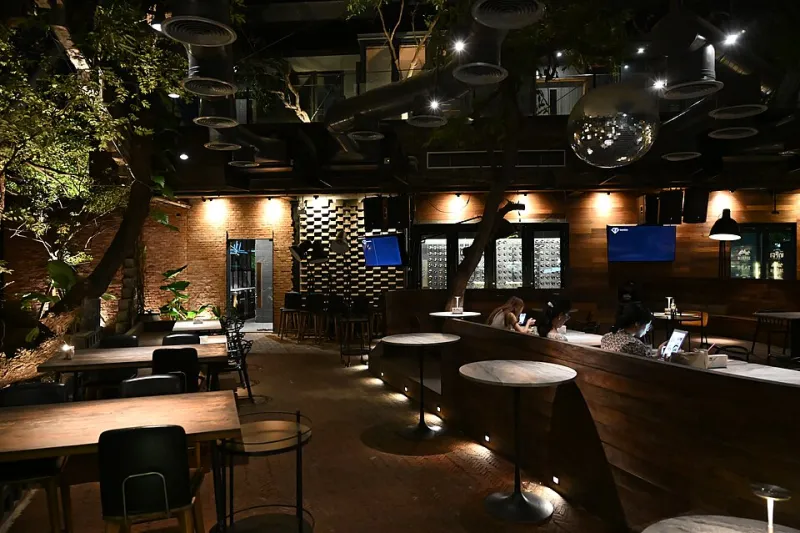
Photo: PattayaPatrol, CC BY-SA 4.0, via Wikimedia Commons
You've done this before. You walk into a place, take maybe three steps inside, and something just feels off. Or, on a better day, something feels exactly right — like the room itself is leaning toward you. You don't know why yet. Nobody's spoken to you. You haven't even looked at the menu. But the verdict is already forming.
That instinct isn't random. It's your brain processing dozens of environmental signals at once, and if you learn to slow that process down, you can use it deliberately. For travelers trying to find places where genuine connection actually happens — not just where tourists get fed and shuffled out — this skill is worth developing.
The first sixty seconds in any new spot are more informative than most people realize.
Start With the Light
Lighting is the single fastest indicator of what a venue is built for. Bright, flat, overhead lighting is efficient. It's practical. It says: we move people through here quickly. That's fine if you need a coffee before a flight, but it's not where you're going to end up talking to someone for two hours.
The places where conversations actually happen tend to be lit from the sides or below — lamps on tables, sconces on walls, candles if you're lucky. That kind of light creates pools of warmth rather than a uniformly illuminated room. It shrinks the psychological scale of the space, making it feel like a series of smaller, more intimate environments nested inside one larger one. People lean in. Eye contact becomes more natural. The room is literally designed, whether intentionally or not, for human closeness.
When you walk in, don't look at the decor first. Look at where the light is coming from.
Listen Before You Look Around
Noise level matters, but the texture of the noise matters more. A loud room isn't automatically a bad sign — some of the best bars in New Orleans or Chicago are genuinely loud, and yet people connect in them constantly. What you're listening for is whether the noise is layered with conversation or dominated by something else.
If the music is mixed so loud that you'd have to raise your voice to be heard across a small table, that's a design choice. It's not accidental. High-volume music keeps interactions brief and transactional. It's not hostile to people — it's just not built for them to linger.
On the other hand, a room where you can hear the murmur of overlapping conversations — where the ambient sound is mostly people — signals something different. The place has enough activity to feel alive, but not so much sonic domination that real exchange gets squeezed out.
Watch the Staff Interact With Each Other
This one takes maybe thirty seconds, but it's surprisingly reliable. Find a moment where two staff members are interacting — passing behind the bar, checking in on a table, handing off an order. Watch how they do it.
In places that are purely transactional, staff interactions tend to be clipped and functional. Nothing wrong with that. But in spots where the culture runs deeper, you'll often see something warmer — a quick joke, a knowing look, a brief moment of actual human exchange between coworkers. That kind of internal culture almost always bleeds outward. Staff who genuinely like being there tend to extend that energy toward the people sitting in their space.
You're not looking for performative friendliness. You're looking for whether the people who work there seem to actually inhabit the place, or whether they're just passing through it on a shift.
Table Distance Is a Policy, Not an Accident
Restaurants and bars make deliberate choices about how much space to put between their tables. More tables packed into a room means more revenue per square foot. It also means less privacy, which can actually encourage interaction — but only up to a point. When tables are crammed so close together that you're essentially sharing a meal with strangers by default, people tend to retreat inward, protecting their own space rather than engaging outward.
The sweet spot is tables that are close enough to make accidental conversation feel natural but far enough apart that it doesn't feel forced. Think of the difference between a neighborhood diner in Portland where the counter seats put you shoulder-to-shoulder with whoever shows up, versus a midtown Manhattan restaurant where the tables are technically close but the vibe is determinedly private.
If the seating arrangement feels like it was designed with humans in mind — rather than just capacity — that's a good sign.
Look for the Regulars
This one is the fastest read of all. Scan the room for anyone who looks like they belong there in a way that goes beyond just being a customer. Someone who greeted the bartender by name. A person sitting alone who looks comfortable rather than awkward. A small group that seems to be continuing a conversation that started last week.
Regulars are the single best indicator that a place is worth staying in. They don't keep coming back to somewhere that doesn't serve them well — not just in terms of the food or drinks, but in terms of how it makes them feel. Their presence is a vote of confidence cast repeatedly, over time. A room full of first-timers can still be great, but a room with even a few regulars is telling you something important: people have decided this place is theirs.
As a traveler, that's exactly the kind of place you want to find. Those regulars aren't a barrier to entry — they're often the most willing to talk, because they feel at home enough to be generous with their space.
The Sixty-Second Verdict
None of this requires overthinking. Walk in. Feel the light. Listen to the noise. Glance at the staff. Check the table spacing. Find a regular.
By the time you've done all of that — and it really does take about a minute — you'll have a pretty clear read on whether this is a place where something might actually happen between you and another human being, or whether it's a place that's perfectly fine but built for something else entirely.
The goal of all of this, really, is to stop walking into places passively and start walking in with your antenna up. The best spots for genuine connection aren't always the most obvious ones. They don't always have the best reviews or the most Instagram posts. But they do tend to broadcast what they are, right from the door — if you're paying attention.