Same Room, Completely Different Planet: Breaking Through the Invisible Wall Between Tourists and Locals
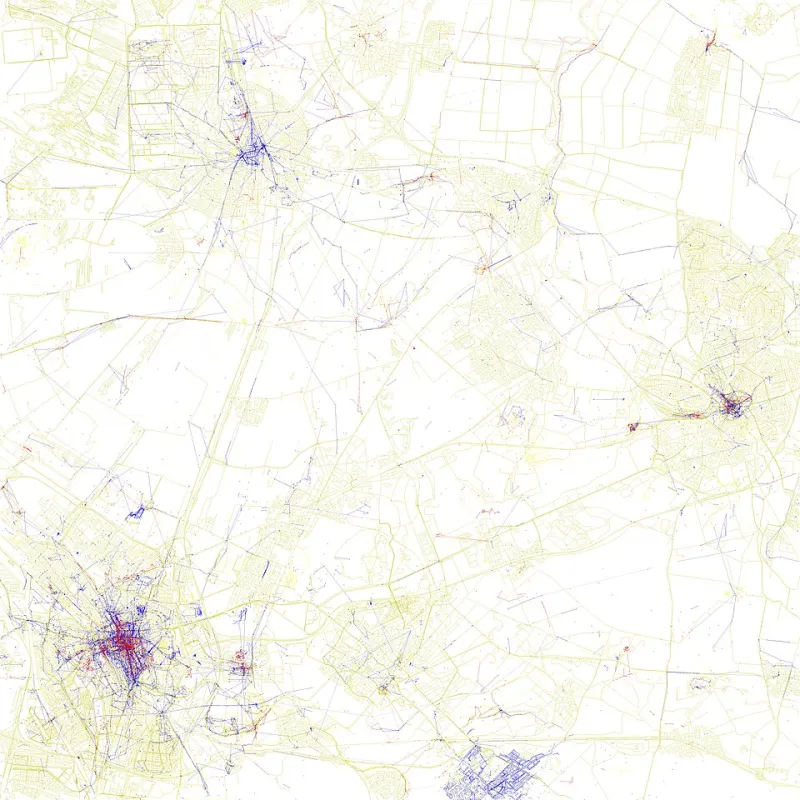
Photo: Eric Fischer, CC BY-SA 2.0, via Wikimedia Commons
Picture this: You've done everything right. You skipped the tourist trap restaurants, found a neighborhood spot on a side street, ordered something local, and planted yourself at the bar like you belong there. And yet — somehow — you're still watching the real social life of the place happen just out of reach. Locals are laughing, nodding at each other, getting refills without asking. You're technically in the same room. You might as well be watching through glass.
This is what you could call the parallel universe problem. Two groups of people occupying identical physical space but operating inside completely different social realities. It happens everywhere — in New Orleans dive bars, in Tokyo ramen counters, in Buenos Aires neighborhood cafés. And the frustrating part is that proximity alone doesn't fix it. Just being there isn't enough.
So what is?
The Timing Gap Nobody Talks About
The first invisible barrier is one most travelers never even consider: you're probably showing up at the wrong time.
Locals don't eat, drink, or socialize on tourist schedules. In Spain, dinner before 9 PM is practically a confession that you're not from around here. In New York, the real neighborhood bar crowd filters in after 7, once the after-work crush has thinned. In small-town Mexico, the plaza fills up on Sunday evenings in a way that has nothing to do with any guidebook recommendation.
When you arrive at noon for a "local lunch spot" and find only other visitors, it's not a coincidence. The actual regulars come at 1:30, maybe 2. They have a rhythm built around work schedules, family patterns, and decades of habit. Your vacation schedule runs perpendicular to all of that.
The fix sounds simple but requires actual discipline: find out when locals show up, then show up then. Ask your Airbnb host. Ask the bartender during a quiet moment. Look around at who's not there yet, and wait for them.
Body Language Is Broadcasting Your Outsider Status
Even when travelers nail the timing, there's another layer working against them — and it's written all over their posture.
Tourists tend to face outward. They scan the room, make eye contact with strangers, look curious and open in a way that reads as searching. Which makes sense — they are searching. But locals aren't. Locals face inward toward whoever they came with, or they settle into a comfortable solitude that signals they're not there to make new friends tonight. They're there to decompress.
When a local clocks your wide-eyed, room-scanning energy, the social math is immediate: that person is a visitor. And visitors, however well-intentioned, often want something — directions, recommendations, conversation, validation. That's not a judgment. It's just pattern recognition built from years of experience.
Slowing your energy down is one of the most underrated moves in cross-cultural socializing. Settle your gaze. Face the bar, not the room. Let a few minutes pass without doing anything. You stop looking like someone who arrived; you start looking like someone who stays.
The Unspoken Codes Running in the Background
Every social space has operating rules that nobody wrote down and nobody explains. They're absorbed over time by the people who belong there, and they're invisible to everyone else.
Maybe it's that the corner booth is always left for a specific family on Friday nights. Maybe the bartender only chats when she's not making drinks, and interrupting her process is a minor but real social offense. Maybe there's a greeting ritual between regulars — a specific nod, a particular phrase — that signals membership in a way you can't fake.
These codes aren't designed to exclude you. They just weren't designed for you. They evolved organically among people who have been showing up together for years.
The only honest way into this layer is observation and patience. Watch how regulars interact with the staff. Notice who greets whom and how. Pay attention to what doesn't happen — which seats stay empty, which conversations get kept short. The social architecture of a place reveals itself if you stop trying to participate long enough to actually see it.
The Shift from Observer to Participant
Here's where it gets interesting. Because crossing from parallel universe to shared space isn't about forcing connection — it's about making yourself available for it in a way that feels natural to the people already there.
A few things that actually work:
Position matters more than you think. Bar corners and counter seats adjacent to regulars put you in the natural conversation radius. A table in the middle of the room keeps you in tourist territory. You're not invisible there — you're just not adjacent to anything.
Give the staff your full attention. Not in a needy way, but in a present way. Learn the bartender's name. Remember what they told you last time if you've been in before. Tip well and without fanfare. Staff are the connective tissue of any social space, and being genuinely good to them changes how the room reads you.
Let the first conversation come to you. When you've done the timing, the body language, the positioning — you stop broadcasting visitor and start registering as someone who might actually belong. That's when a regular glances over, makes a comment about the game, mentions something about the neighborhood. It's a small opening, but it's a real one.
Ask about the place, not just what to do in it. "What's this neighborhood been like lately?" lands differently than "What should I see while I'm here?" The first question invites a local to talk about their life. The second asks them to be your tour guide. One creates a conversation. The other creates a transaction.
You're Not Trying to Become a Local
It's worth being honest about what this is and isn't. You're not going to dissolve the tourist-local divide in a single evening. You're not going to become a regular in 48 hours. And honestly, trying too hard to seem like you belong tends to have the opposite effect — locals can smell the performance.
What you're actually doing is something smaller and more achievable: you're positioning yourself to be a real person in a real place, rather than a visitor passing through a backdrop. You're making yourself available for genuine, unscripted interaction — the kind that can't be planned or booked or Yelp-reviewed.
The parallel universes don't have to stay parallel. But the bridge runs on patience, attention, and the willingness to operate on someone else's rhythm for a change. Which, when you think about it, is basically the whole point of going somewhere new in the first place.