From 'Hey, Is This Seat Taken?' to Lifelong Friend: The Science of Travel Bonds That Actually Stick
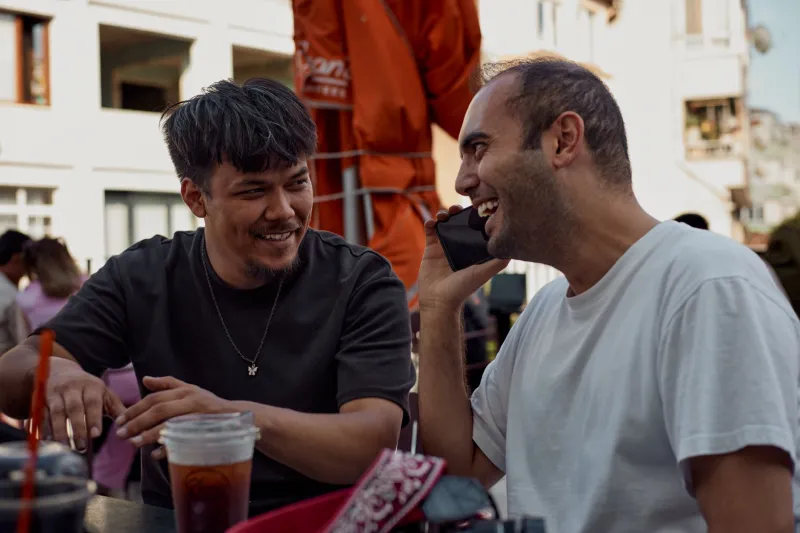
There's a particular kind of friendship that only travel seems to produce. It forms fast, burns bright, and somehow — against all reasonable odds — it lasts. You meet someone at a courtyard bar in Oaxaca or on a bench outside a train station in Lisbon, and within forty-five minutes you're telling them something you haven't told your college roommate in ten years.
Most people chalk it up to luck. But it's not really luck. It's conditions.
What Travel Actually Does to Your Defenses
When you're at home, you're performing a version of yourself that's been refined over years. You know your role — at work, with family, in your neighborhood. You've got a reputation to maintain, a persona that's been slowly calcified by everyone around you already knowing who you are.
Travel strips that away. Nobody at the hostel common room in Nashville or the rooftop café in Medellín knows what you do for a living, who you voted for, or that awkward thing you said at Thanksgiving three years ago. You're just a person in a place, same as everyone else.
Psychologists call this the "stranger on a plane" effect — the phenomenon where people disclose deeply personal information to someone they'll likely never see again. But here's the thing: when you're traveling and actively meeting people, that calculus shifts. The anonymity that makes you open up is the same thing that makes the other person lean in. Both of you are unguarded at the same time. That's rare. That's actually the whole ingredient.
The Moments That Matter More Than You Think
Ask anyone about a friendship that started while traveling, and they'll almost always point to a specific, unremarkable moment. Not a grand gesture. A tiny one.
Mara, a teacher from Denver, met her closest friend — someone she's now visited in three different countries — when they were both waiting out a rainstorm under the awning of a closed shop in Porto. "We were just complaining about our wet shoes," she says. "But then we started walking together when it stopped, and we ended up talking for six hours."
Jordan, a freelance designer from Atlanta, struck up what he thought would be a five-minute conversation with a guy at a communal table in a Tokyo ramen shop. They're still texting. "He just pointed at my bowl and said 'good choice' in English, and I don't know, something about it felt like he was actually talking to me, not just being polite."
The pattern in these stories isn't coincidence — it's proximity plus low stakes plus a tiny crack of genuine curiosity. Someone noticed something real. Someone responded to it honestly. That's the ignition.
Why Some People Are Magnetic in These Situations
You've probably noticed that certain travelers seem to collect friends everywhere they go. They walk into a bar alone and leave with plans for tomorrow. It can feel like a personality trait you either have or you don't. It isn't.
What those people are actually doing — usually without realizing it — is staying present and asking real questions. Not "where are you from" and "how long are you here" small talk, but questions that invite a genuine answer. What brought you to this particular neighborhood? Did you just get here, or have you figured out the city yet? Questions that say: I'm actually curious about you as a person, not just filling silence.
They're also comfortable with a beat of quiet. A lot of would-be connections die because one person panics into filler conversation the second there's a pause. The travelers who form the deepest bonds on the road have learned to let a moment breathe. Sometimes the most interesting thing the other person says comes right after the silence.
The Vulnerability Window
There's a narrow window in every travel encounter where vulnerability is possible. It usually opens when something goes slightly sideways — a missed bus, a confusing neighborhood, a meal that didn't land the way you hoped. Shared mild adversity is one of the fastest social bonding mechanisms humans have.
But it can also open in a moment of genuine wonder. When you're both watching the same sunset over the same city skyline and one of you says, honestly, I wasn't expecting to feel this way about this place — that's an invitation. If the other person meets it instead of deflecting, something real has started.
The trick is recognizing the window when it opens. A lot of travelers miss it because they're busy documenting the moment instead of being inside it. The phone goes up, the caption gets drafted in their head, and the person standing next to them becomes background.
Put the phone down. The window doesn't stay open long.
How to Actually Stay in Touch (Without It Being Weird)
This is where a lot of travel friendships quietly die. The last night is great, you exchange Instagram handles or phone numbers with genuine enthusiasm, and then... nothing. Life resumes. The connection fades into a warm memory.
The ones that last almost always involve one specific behavior: someone reached out first, and they did it soon. Within a day or two, before the energy of the meeting had fully dissipated. Not a vague "great meeting you!" but something specific — a photo from the place you went together, a link to that restaurant you mentioned, a voice note if you're close enough for that.
Specificity is what separates a follow-up that lands from one that feels like an obligation. It says: I was actually there, with you, and this particular thing reminded me of it.
Some of the best travel friendships in the world have been sustained almost entirely through sporadic, specific, deeply genuine check-ins — not constant contact, but real contact when it happens.
The Place Has More to Do With It Than You'd Expect
Here's something Meet in Place would be remiss not to mention: the spot itself is doing a lot of work in these stories.
Mara and her friend didn't meet in a hotel lobby or a tourist attraction. They met under an awning, stuck, with nowhere to be. Jordan met his friend at a communal table designed specifically so strangers would sit together. The environment created the conditions before either of them made a single choice.
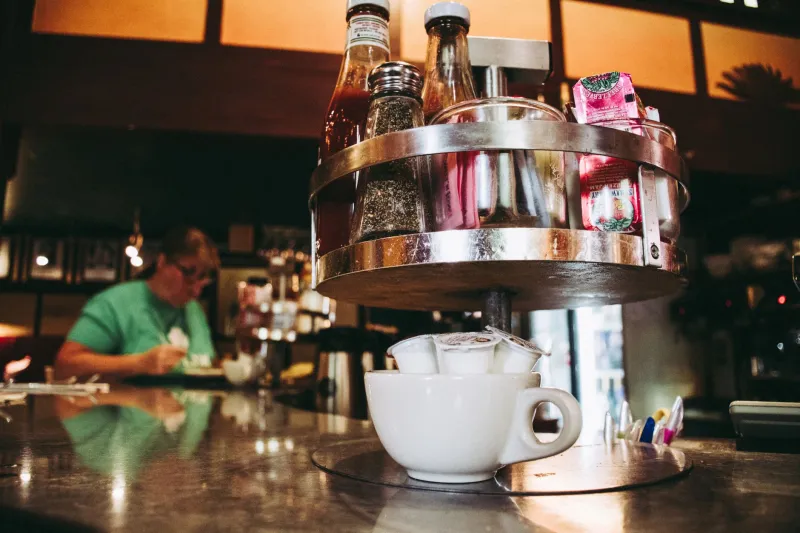
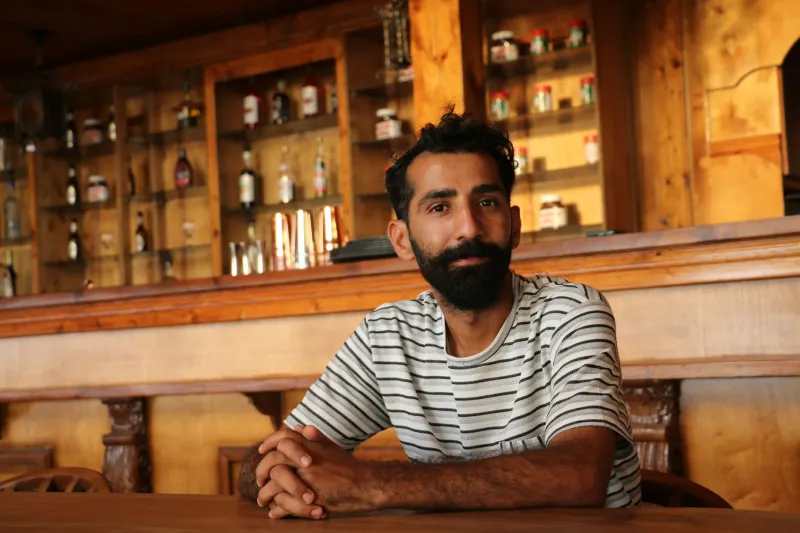
Certain places are built — sometimes intentionally, sometimes accidentally — to produce exactly this kind of encounter. Shared tables. Slow bars. Neighborhood spots where the regulars and the newcomers end up in the same orbit. Courtyards where there's nowhere to sit alone even if you wanted to.
When you're traveling and you want more than sightseeing — when you want the thing that makes a trip mean something — start with the place. Find the spot where people linger, where the furniture faces inward, where the bartender introduces strangers to each other like it's part of the job description.
Get yourself into that room. Stay long enough for something to happen.
The rest has a funny way of taking care of itself.