Why the Most Forgettable Rooms Are the Ones You Can't Stop Talking In
You've been there. The place that doesn't photograph well, doesn't have a concept, and probably hasn't updated its menu since 2009. And yet — somehow — you ended up talking to three strangers, stayed two hours longer than you planned, and left feeling like you actually went somewhere.
Meanwhile, that architecturally stunning coffee shop with the exposed concrete and the curated playlist? You sat in it for forty-five minutes, stared at your phone, and left having spoken to exactly nobody.
This isn't a coincidence. And it's not just vibes.
The Design Nobody Designed
Here's the thing about truly social spaces: most of them weren't engineered to be social. They just ended up that way. A counter that faces the street. Tables close enough that you can't help but overhear. A ceiling low enough that sound bounces back to you instead of disappearing into the air.
Social researchers who study proxemics — the science of how physical space shapes human behavior — have been onto this for decades. Edward Hall's foundational work in the 1960s established that people interact most naturally within what he called "social distance": roughly four to twelve feet apart. Close enough to talk without effort, far enough that you're not crowding anyone.
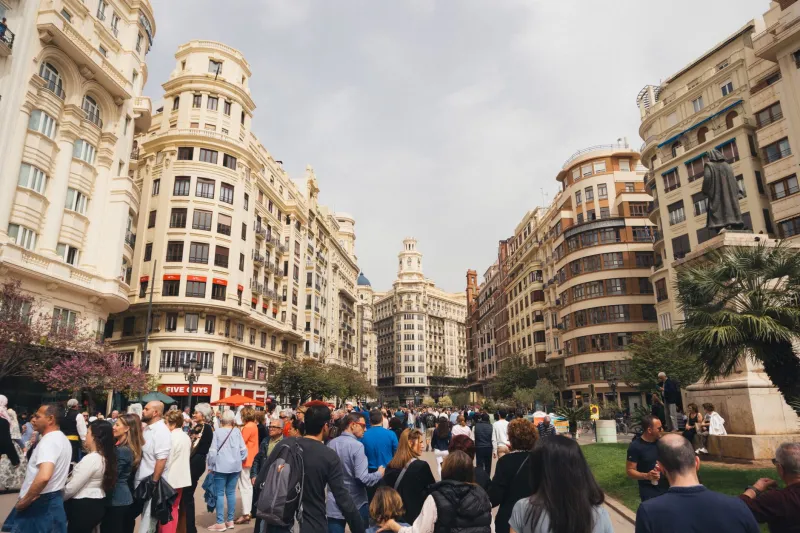
The problem with a lot of modern, design-forward venues is that they optimize for the photo, not the distance. High ceilings read as dramatic on Instagram. They also swallow sound and make you feel small and oddly isolated. Wide-open floor plans look airy and aspirational. They also mean that the nearest human being is twelve feet away, which — per Hall — puts them squarely in the "public" zone, where you don't spontaneously start conversations.
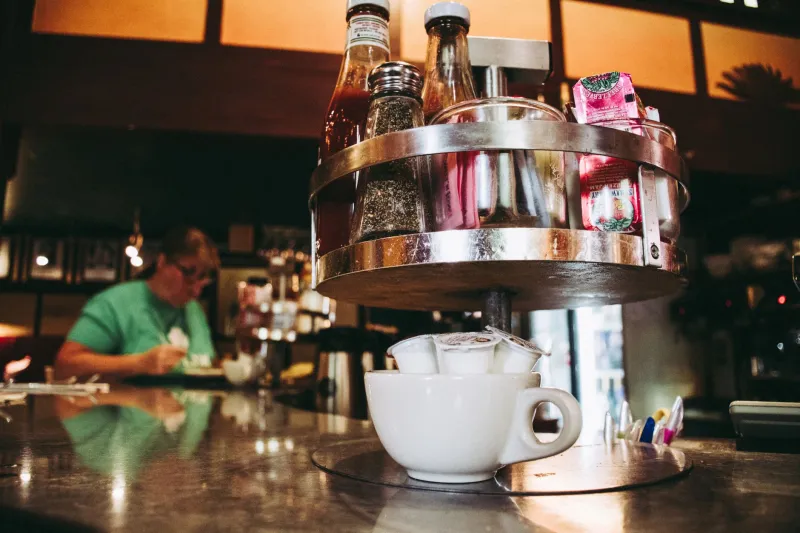
The grimy diner with the low drop ceiling and the booths crammed in together? Accidentally perfect.
Sightlines Matter More Than You Think
There's another variable that rarely gets discussed: where you're looking when you sit down.
In venues where people connect, the seating almost always puts you in a position to watch something — a door, a bar, a kitchen pass, a street. Not because people are nosy (well, not only because of that), but because shared observation is one of the oldest conversation openers there is. Did you see that? Can you believe this weather? Is that the owner?
Compare that to the Instagram-optimized café where every seat faces a wall, a window with a view of a parking structure, or — worse — another person's back. There's nothing to collectively look at, so there's nothing to spontaneously comment on. You're left with your own thoughts and your own screen.
Regulars at social spots often describe this without knowing the terminology. Ask someone why they keep coming back to a particular bar or coffee shop and they'll say something like, "I like being able to see everything that's going on." That's not nosiness. That's the basic human desire to be in a room rather than just occupying space in one.
The Acoustic Sweet Spot
Sound is probably the most underrated element of a social space, and it operates in a way that feels almost paradoxical.
Complete quiet kills conversation. So does complete noise. The sweet spot — what acoustic designers sometimes call "babble cover" — is a moderate ambient sound level where you can hear the person across from you clearly, but you can't make out what the table next to you is saying. That ambient noise gives you a kind of social permission. Your conversation feels private even though you're in public. You're not performing for the room.
A lot of high-end, beautifully designed spaces get this catastrophically wrong. Hard floors, hard walls, high ceilings — all of it bounces sound in ways that make normal conversation feel like you're shouting. So people stop talking. Or they talk less. Or they lean into their phones because it's just easier.
The places that get it right — your classic American diner, the neighborhood bar with the sticky floors and the wood paneling — have decades of acoustic accidental wisdom baked in. Upholstered booths absorb sound. Drop ceilings do too. The hum of a coffee machine or a jukebox fills in the gaps without overwhelming.
Furniture That Doesn't Ask Too Much of You
There's a concept in design called "affordance" — the idea that objects signal how they want to be used. A chair with armrests says settle in. A stool at a counter says you're part of what's happening here. A plush lounge chair angled away from everything says retreat.
The furniture arrangements in genuinely social spaces almost always feature some version of the counter or the communal table — not because people inherently want to sit elbow-to-elbow with strangers, but because those configurations normalize the possibility of interaction without requiring it. You can sit at a diner counter and talk to nobody. But the option is there, and the layout makes it feel natural if it happens.
Contrast that with the carefully spaced two-tops at your aesthetically ambitious neighborhood café, each one a little island, each one implicitly saying this space is for you and one other person, and that's the whole deal. There's nowhere for a third person to pull up. There's no bar to lean against. The room has already decided how social you're allowed to be.
What Travelers Can Actually Use Here
If you're moving through a new city and you want to actually meet it — not just photograph it — pay attention to the rooms that don't immediately impress you.
Look for places where the furniture is a little worn, which means people have actually been sitting in it. Look for counters, bars, and communal tables — any seating that puts you adjacent to a stranger rather than across from an empty chair. Look for rooms where you can see the door, the kitchen, or the street. Look for places loud enough that your conversation feels private, quiet enough that you don't have to shout.
And maybe most importantly: look for places where the design clearly wasn't the point. Because when a room isn't trying to impress you, it's usually doing something more useful — it's just letting people be in it together.
That's rarer than it sounds. And when you find it, you tend to stay a while.