Why Coming Home Feels Like a Downgrade (And What to Do About It)
There's a specific kind of bad Tuesday that only happens after a really good trip.
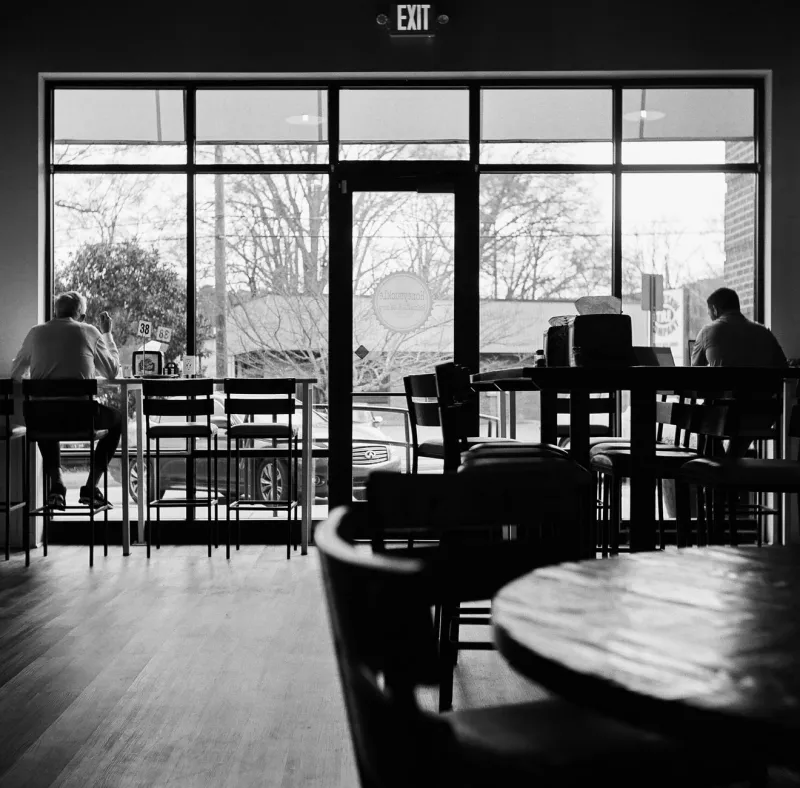
You're back home. The suitcase is half-unpacked in the corner. You go to your usual coffee shop, the one you liked fine before you left, and something's off. It's not that anything changed while you were gone. It's that you changed. You spent ten days somewhere people actually used their public spaces — where strangers shared tables without being asked, where the guy behind the bar knew half the room by name, where a two-hour lunch wasn't an event, it was just lunch. And now you're back, and everything feels efficient and clean and weirdly lonely.
This is reverse culture shock. It's real, it's underdiagnosed, and it hits hardest not in the dramatic ways you'd expect — missing the food, the weather, the views — but in these small, dull moments when you realize your regular life doesn't have whatever that was.
The Specific Thing You're Missing
It's worth getting precise about what actually felt different, because "everything was better over there" is both too vague to act on and probably not entirely true.
Most returning travelers aren't mourning the architecture or the cuisine. They're mourning a particular quality of social life — the ease of it, the density of it, the way people seemed to genuinely occupy the same space rather than passing through it. In a lot of American cities and suburbs, public spaces are designed for transaction, not lingering. You go, you get the thing, you leave. The coffee shop has fast Wi-Fi and awkward seating precisely so you'll be productive, not comfortable. The bar closes at ten. The park has nowhere to sit.
When you've spent time somewhere that designed its public life differently — a piazza in Italy, a night market in Thailand, a neighborhood pub in Ireland, or even just a particularly good block in New Orleans or Portland — you come home with a new baseline. And your old normal doesn't clear it anymore.
The Uncomfortable Truth About 'Authentic' Places
Here's where it gets complicated: some of what you experienced abroad was real community, built over years by people who actually live there. And some of it was the traveler's halo — the way novelty makes everything feel more vivid, the way being a stranger makes you more open, the way not having responsibilities makes an afternoon feel luxurious instead of wasted.
Both things can be true. The piazza was genuinely alive. You were also genuinely more present in it than you are at your regular coffee shop, where you're half-thinking about your inbox and whether you need to call your landlord.
The question isn't whether home can match the magic of the trip. It probably can't, not exactly. The question is whether some of what made that place feel alive is reproducible — not the setting, but the behavior.
Applying the Principles Without Buying a Plane Ticket
The thing about "meeting in place" is that it's not geography-dependent. The principles that make a neighborhood bar in Dublin feel like a living room are mostly behavioral, not architectural. Someone decided to become a regular. Someone decided to learn the bartender's name. Someone decided to put their phone away. Someone decided to stay for another round even though they didn't have to.
You can do those things in Columbus, Ohio. In suburban Phoenix. In the town you grew up in and moved back to and low-key resent.
Become a regular somewhere on purpose. Pick one place — a coffee shop, a bar, a diner, a bookstore with a reading corner — and go back enough times that the staff recognizes you. Order the same thing for a while. Show up at the same time. This sounds almost embarrassingly simple, but it works. Regularity creates belonging, and belonging creates the kind of ease you were chasing abroad.
Slow down in your own public spaces. Order the coffee and sit with it instead of walking out. Go to the farmers market without a list. Arrive at the bar before you're meeting people, not after. The pacing of travel — the way you naturally slow down when you're somewhere new — is available to you at home. You just have to choose it.
Look for the spot that already has what you want. Every city has at least one place where people actually linger, where the regulars are real, where strangers end up talking. It might not be the obvious choice. It might be a dive bar two neighborhoods over, or a Vietnamese restaurant where the owner knows half the tables, or a park that somehow has better energy than the others. Find it. Go there.
The Upside of the Disappointment
Reverse culture shock is uncomfortable, but it's also useful information. The fact that coming home feels like a downgrade means you now know what you're looking for — not just when you travel, but in your actual life. That's not a small thing.
A lot of people spend years vaguely dissatisfied with their social lives without being able to name why. Travel hands you the diagnosis. The cure is mostly just deciding to want it badly enough to build it where you already are.
The place you're looking for isn't always somewhere else. Sometimes it's three blocks from your apartment, waiting for you to walk in and stay awhile.