Nobody Owns That Barstool — And Yet Everybody Knows It's Taken
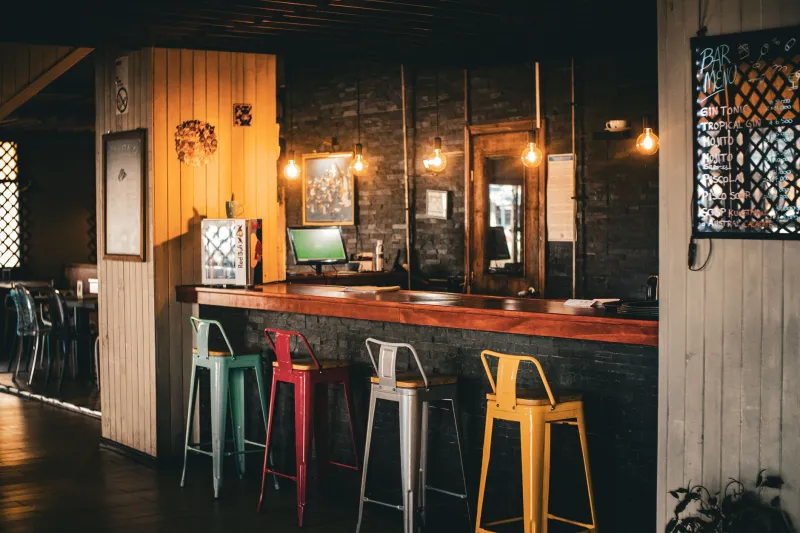
There's a stool at the end of the bar at a coffee shop in Pittsburgh — third from the left, closest to the window — that nobody technically owns. The owner of the place will tell you that herself. "It's a public business," she says, laughing a little. "Anyone can sit anywhere."
And yet, for the past eleven years, that stool has belonged to a retired schoolteacher named Gerald who arrives every weekday at 7:42 a.m. with a folded newspaper and a very specific order. Sit in that seat when Gerald walks in and the room doesn't erupt. Nobody says a word. But you'll feel it — a kind of atmospheric pressure shift, a collective intake of breath, a server suddenly finding something to do near you. You'll move. Everyone does.
This is the unwritten law of the regular's spot. It exists in dive bars in Nashville, Sunday-morning diners in Portland, corner tables at bodegas in the Bronx, and back-patio chairs at neighborhood coffee shops from Savannah to Seattle. Nobody put it in writing. Nobody voted on it. But it's as real as any rule you'll find posted on a wall.
How a Spot Becomes The Spot
It doesn't happen overnight. Regulars don't show up once and stake a claim. The process is slower and more organic than that — more like a tide coming in than a flag being planted.
"It's repetition," explains a bar manager in New Orleans who's worked the same neighborhood joint for going on nine years. "Someone comes in enough times, sits in the same place, and eventually the staff starts holding it for them without even thinking about it. It just becomes the thing we do."
That's the key phrase: without even thinking about it. The territorial logic of these spaces isn't consciously enforced. It emerges from routine, from the social shorthand that develops between people who share a space over time. A regular's spot is basically a physical manifestation of belonging — proof that someone has put in enough hours to be woven into the fabric of a place.
For travelers, this is worth understanding before you walk in the door. When you sit down somewhere new, you're not just picking a seat. You're stepping into a social ecosystem that's been quietly calibrating itself for months or years. Most of the time, nobody will say anything. But you might be sitting in the middle of someone's story without knowing it.
The Hierarchy Nobody Talks About
Every gathering place has its own version of the social ladder, and the seating chart is basically a map of it.
The most powerful spots — the ones that carry the most implicit ownership — tend to be the ones with the best sightlines. Corner seats. Spots facing the door. The chair at the end of the bar where you can see everyone who comes in. These aren't just comfortable. They're strategic. And the people who occupy them regularly have, consciously or not, earned a kind of status.
Below them are the mid-tier regulars — folks who come in a few times a week, have their orders memorized by the staff, maybe know the owner by name. They have preferences, not claims. They'll take their usual spot if it's open but won't expect anyone to hold it.
And then there are the semi-regulars, the people who come in once every week or two. They're recognized but not known. They don't have a spot so much as a general vibe about where they like to sit.
Travelers, almost by definition, enter at the bottom of this ladder. That's not a slight. It's just the math of time spent.
What Happens When Someone Challenges the Order
Most of the time, nothing dramatic. The social correction is subtle — a look, a slight adjustment in how a server interacts with you, a regular who takes slightly longer than necessary to find somewhere else to sit while making eye contact with the bartender in a way that communicates volumes.
Occasionally it gets more direct. A woman who runs a beloved breakfast spot in Chicago recalls a tourist who sat at the table her oldest regular had occupied every Saturday for a decade. "He walked in, saw someone there, and just kind of... stood in the doorway for a second. He didn't say anything. He sat somewhere else. But I could tell it broke his heart a little."
She went over and explained the situation to the tourist — kindly, she emphasizes — and the tourist, charmed by the story, offered to move. The regular declined. "He said it was fine. But I think it took him a few weeks to fully get over it," she admits, smiling.
This is actually the more common outcome: grace, not conflict. Most regulars understand, at least intellectually, that they don't own anything. The social contract is flexible enough to absorb the occasional disruption. What it can't absorb, and what will genuinely damage your standing, is indifference — sitting in a claimed spot and acting like the social fabric around you simply doesn't exist.
How Travelers Can Navigate This Without Stepping on Anyone
The good news is that most of these ecosystems are welcoming to newcomers who show up with a little awareness and humility. Here's what actually works:
Watch before you sit. Spend two minutes at the door observing. Is there a cluster of empty seats that nobody's touching even though the place is busy? That's a clue. Is there a spot where the staff keeps glancing, as if they're expecting someone? Another clue.
Ask. Seriously, just ask. "Is this seat taken?" is not a strange question in a local spot. It's a sign that you know how these places work. Staff will almost always tell you the truth — and they'll remember that you asked.
Come back. This is the real unlock. One visit makes you a tourist. Two or three visits in a short trip, especially at the same time of day, starts to make you a presence. People notice consistency. It signals that you're interested in the place, not just passing through it.
Don't perform. Nothing flags an outsider faster than someone trying too hard to seem like they belong. Relax. Order something, tip well, be friendly without being performative. Let the room come to you.
The Real Point of All This
The reason these invisible rules exist isn't pettiness or exclusion. It's the opposite. The regulars who've claimed those stools and booths and corner tables are the ones who keep these places alive. Their loyalty is what makes a neighborhood spot feel like a neighborhood spot instead of just another generic café. They're the social infrastructure.
When you travel somewhere and find one of these places — really find it, not just Yelp it — you're getting access to something that took years to build. The least interesting thing you could do is ignore the context and just consume the coffee.
The most interesting thing? Sit down, pay attention, and start putting in your own time. You might not earn that corner stool on this trip. But you'll leave knowing exactly which one it is — and that's already more than most people get.